Born in Üsküdar
Born 4 February 1878 in Scutari, on the Asian shore of the Bosphorus, into a prosperous Armenian family. Her beloved uncle Khachik — a Zorba-like free spirit — would become the hero of her unfinished magnum opus.
Armenian writer · public intellectual · feminist
1878 — 1943
The only woman on the Ottoman list of Armenian intellectuals condemned on 24 April 1915 — the writer who escaped, and spent the rest of her life testifying in ink.
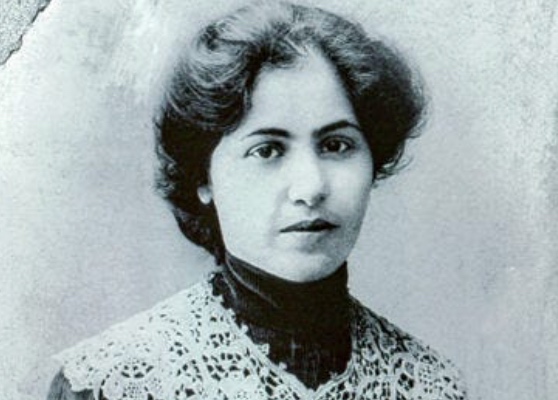
The night of the arrests
On the night of 24 April 1915, Ottoman authorities began arresting several hundred Armenian intellectuals in Constantinople — poets, lawyers, teachers, editors, priests — the cultural leadership of a people, marked for deportation and death. Zabel Yesayan, novelist and advocate of women's rights, was the only woman on that list. Warned in advance, she slipped across the Bulgarian border a step ahead of the police. Most of the others were never seen again.
A life in six movements
Born 4 February 1878 in Scutari, on the Asian shore of the Bosphorus, into a prosperous Armenian family. Her beloved uncle Khachik — a Zorba-like free spirit — would become the hero of her unfinished magnum opus.
In 1895, the magazine Tsaghik prints her first prose poem, «Ode to the Night», when she is seventeen. She goes on to write for the Mercure de France and for Armenian journals across the diaspora.
She moves to Paris — among the first women from Istanbul to study abroad — and reads literature and philosophy at the Sorbonne, working her way through as a proofreader and contributor.
After the 1909 Adana massacres, the Armenian Patriarchate sends her to Cilicia to deliver relief. What she sees — burned churches, orphans, empty villages — becomes «In the Ruins».
Warned that she is on the April 24 deportation list — the only woman on it — she flees to Bulgaria, then the Caucasus, where she organises relief for refugees and orphans.
She leaves Paris for Soviet Armenia in 1933 to build a national literature. In 1937 the Great Purge arrests her. In 1943 she dies in exile — pen and paper forbidden.
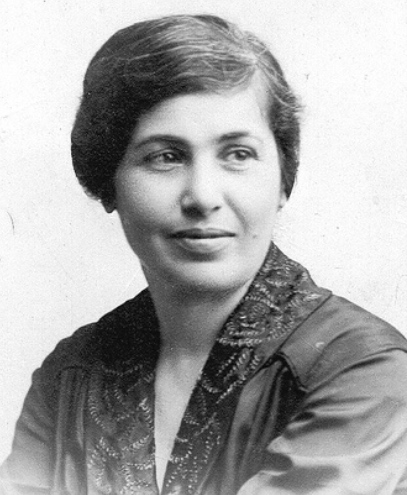
Featured work · Testimony
Averakneroun Mech — “In the Ruins” / “Among the Ruins” · 1911
Sent by the Armenian Patriarchate to Cilicia after the 1909 Adana massacres, Yesayan walked through burned churches, emptied villages and orphanages filled with the wounded. She recorded it all — with the cold discipline of a reporter and the heart of a poet. It remains the only eyewitness account of the massacres written as literature.
— Marc Nichanian, literary scholar · English translation: AIWA Press, 2016
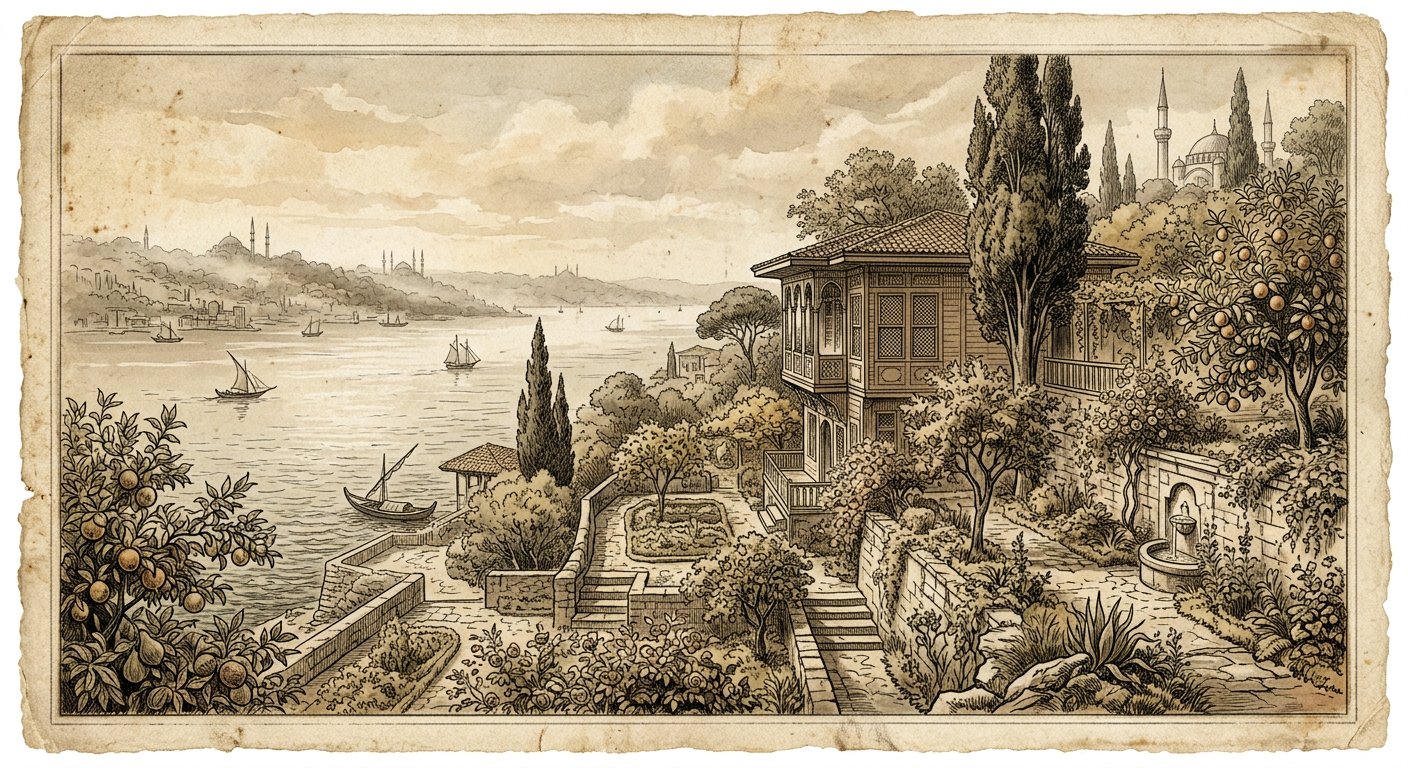
From her memoir
“I took refuge in the gardens every time the ominous dark clouds piled up on the horizon of my life.”
The Gardens of Silihdar · 1935
In her own words — and theirs
These inconveniences are meaningless in my eyes, since I now take an active part in building the future of my country.
Zabel Yesayan, asked why she left Paris for Yerevan, 1933
From what fleeing child's foot had it fallen? In what ruin had the foot wearing it turned to ashes? A little shoe…
In the Ruins · Աւերակներուն մէջ · 1911
Among the Ruins is the only work in the Armenian language in which an eyewitness account is turned into a literary form.
Marc Nichanian, literary scholar
I had resolved to maintain my sangfroid.
Zabel Yesayan — In the Ruins · Աւերակներուն մէջ
Continue
From a single-cell prison in Siberia, she still believed in the page. Read how a girl from the gardens of Üsküdar became Armenia's most important witness — and its most silenced writer.